

Stories
More than a decade ago, RMW’s Hakee Chang imagined an “analog office” where people gathered to think, connect, and escape digital noise, just as technology was beginning to overwhelm the workplace. Today, that idea feels less speculative and more like a natural evolution of how we work.
In 2015, Fast Company’s Mark Wilson explored “the new rules of work” and asked influential designers to envision a workplace ten years in the future. In Mark’s article with Hakee, “Escape From Distractions in the Analog Workplace of the Future,” the emphasis is on a workplace comprised of many destinations that offer employees choices on how they work, rather than only limiting people to a desk and meeting rooms. The “analog workplace” was simple but powerful: “Perhaps the office could be the place where people would want to gather–a destination to reconnect with your fellow employees, collaborators, and other folks,” Hakee explained.
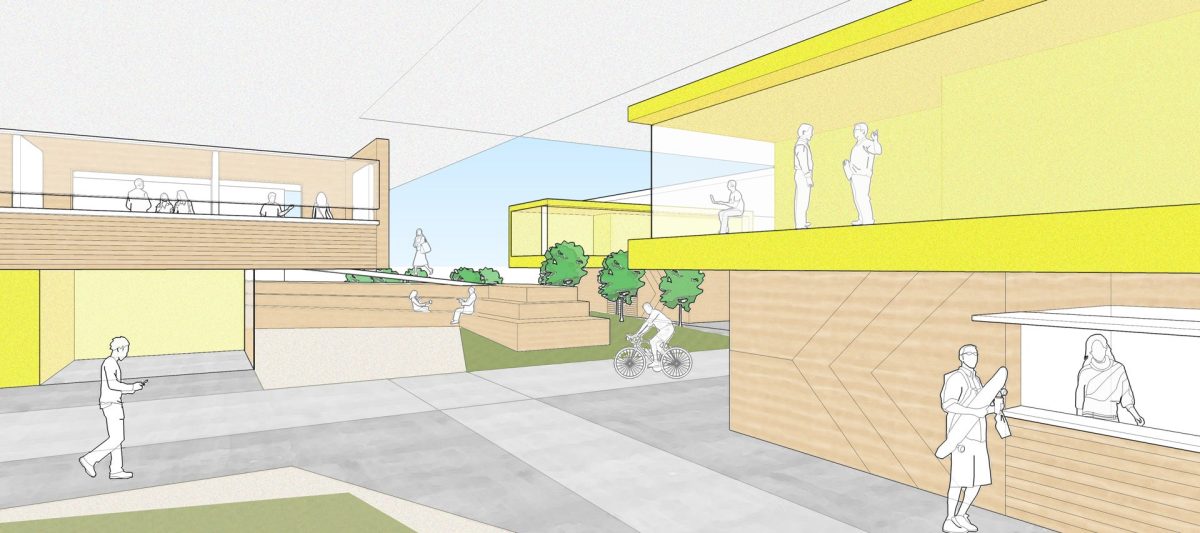
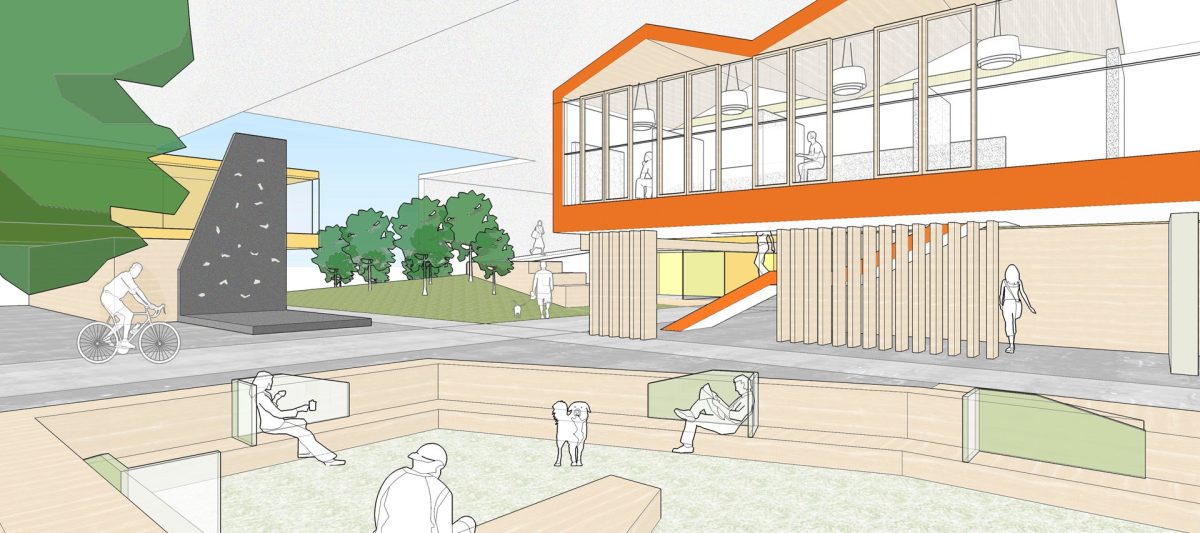
At its core, the analog office responded to something people were already feeling: the growing weight of constant connection. Notifications, interruptions, and digital creep were beginning to erode focus and diminish the quality of attention.
Today’s workplace is saturated with digital tools, from Slack channels to AI-powered dashboards. Yet, at the same time, the physical office has evolved into something more closely resembling Chang’s “destination” than ever before.
A 2024 CBRE survey found that 57% of office tenants identified improved employee amenities and services as a motivating factor when relocating. This underscores how companies are increasingly focusing on creating a balance between areas to work and areas to relax and recharge within the workplace.
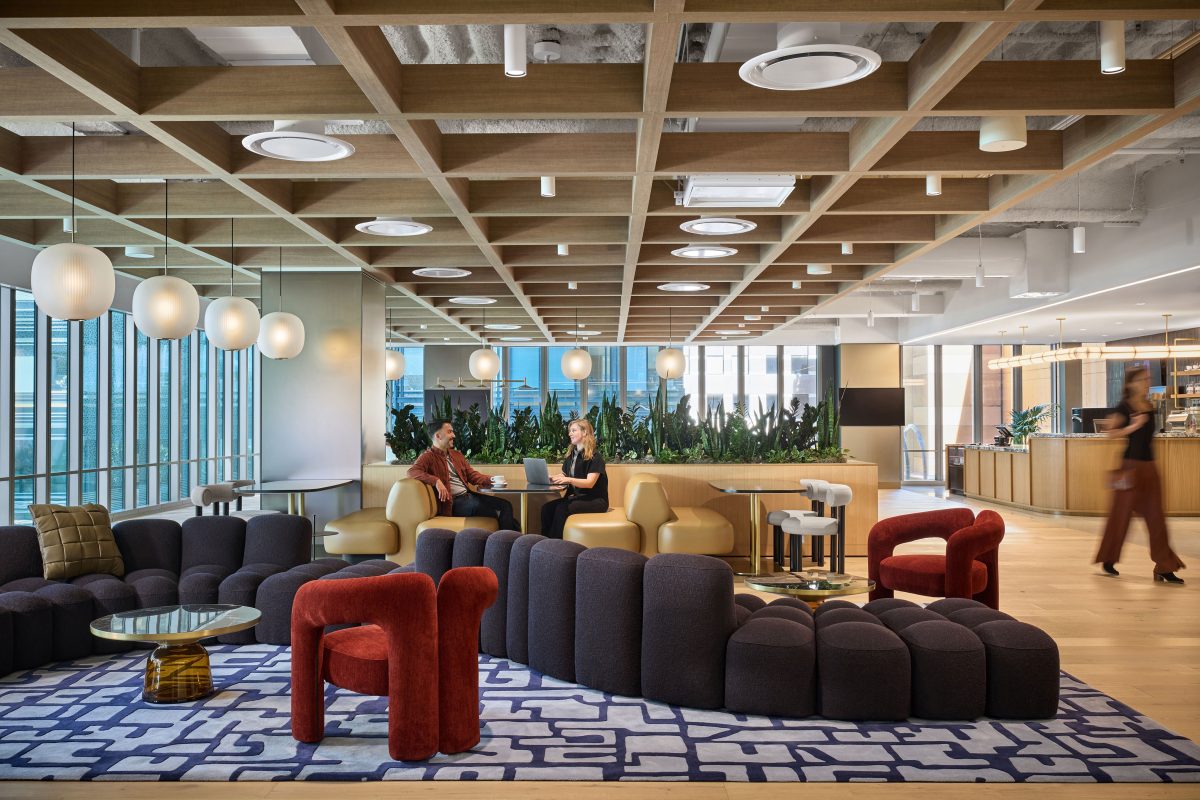
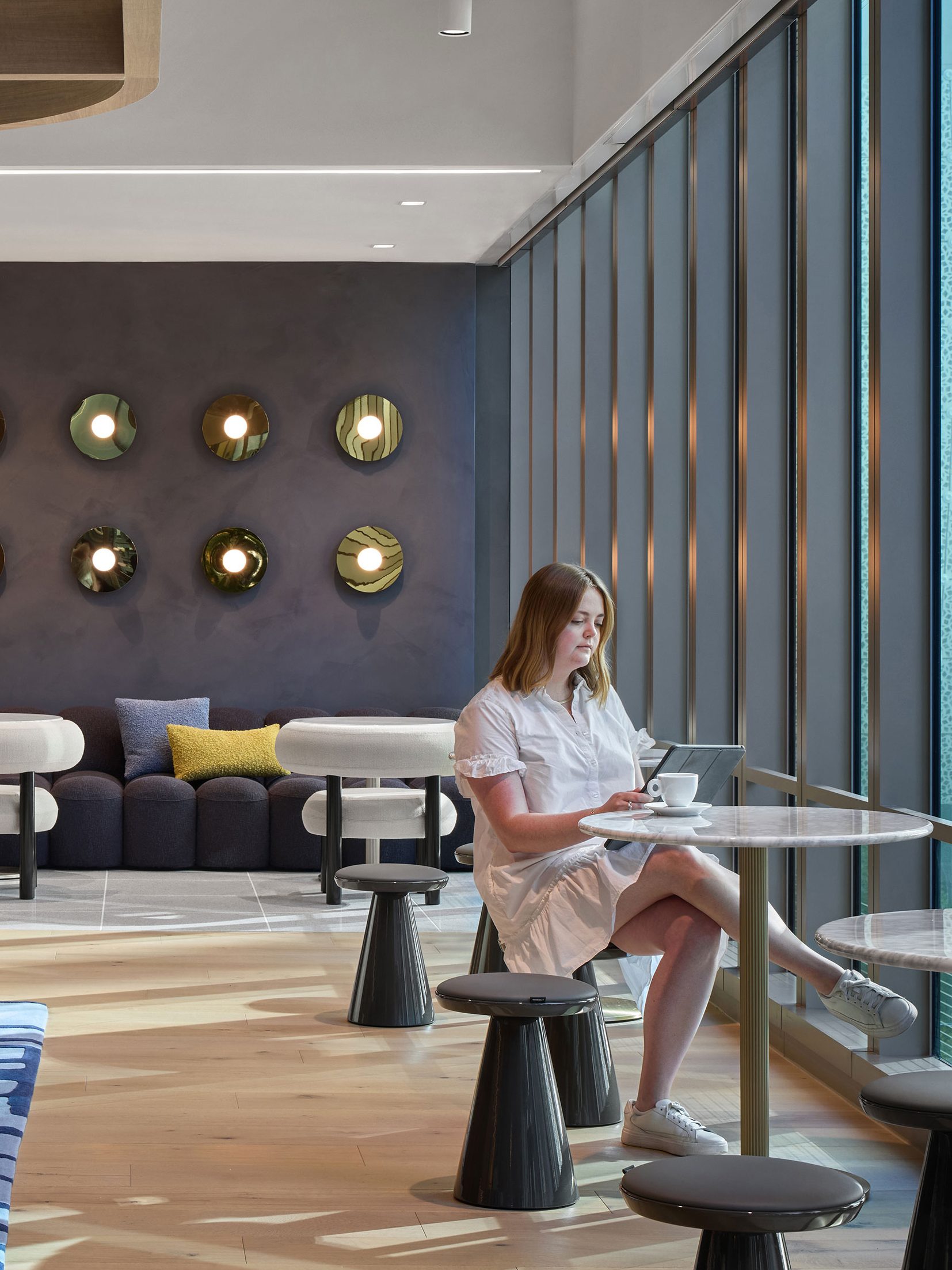
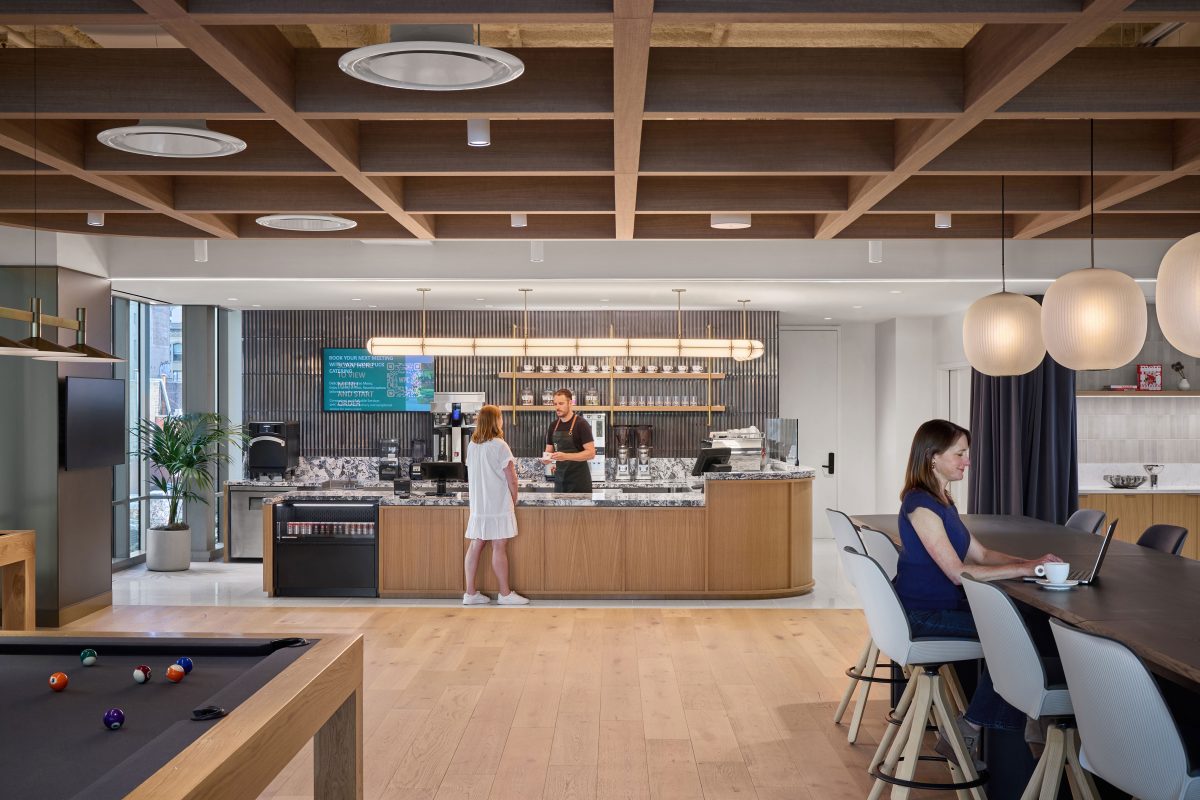
Companies and building owners have invested heavily in amenities designed to draw people in; not just to work, but to connect. Cafés that rival neighborhood coffee shops, lounges that encourage informal conversation, wellness rooms, outdoor terraces, and hotel-like lobbies have become standard features of modern offices.
A recent example is the new amenity center at 555 Mission Tower in San Francisco, where a hospitality-forward environment combines concierge services, lounge spaces, conferencing facilities, a fitness center, recovery and wellness amenities, event space, and curated food and beverage offerings. Designed as the building’s social hub, the amenity center illustrates how workplace environments are increasingly being shaped as destinations that foster connection, wellness, and community.
These spaces aren’t just perks; they function as contemporary work environments. Brainstorming happens beyond a sterile conference table. It unfolds over coffee, in soft-seating areas, or during spontaneous collisions in shared spaces.
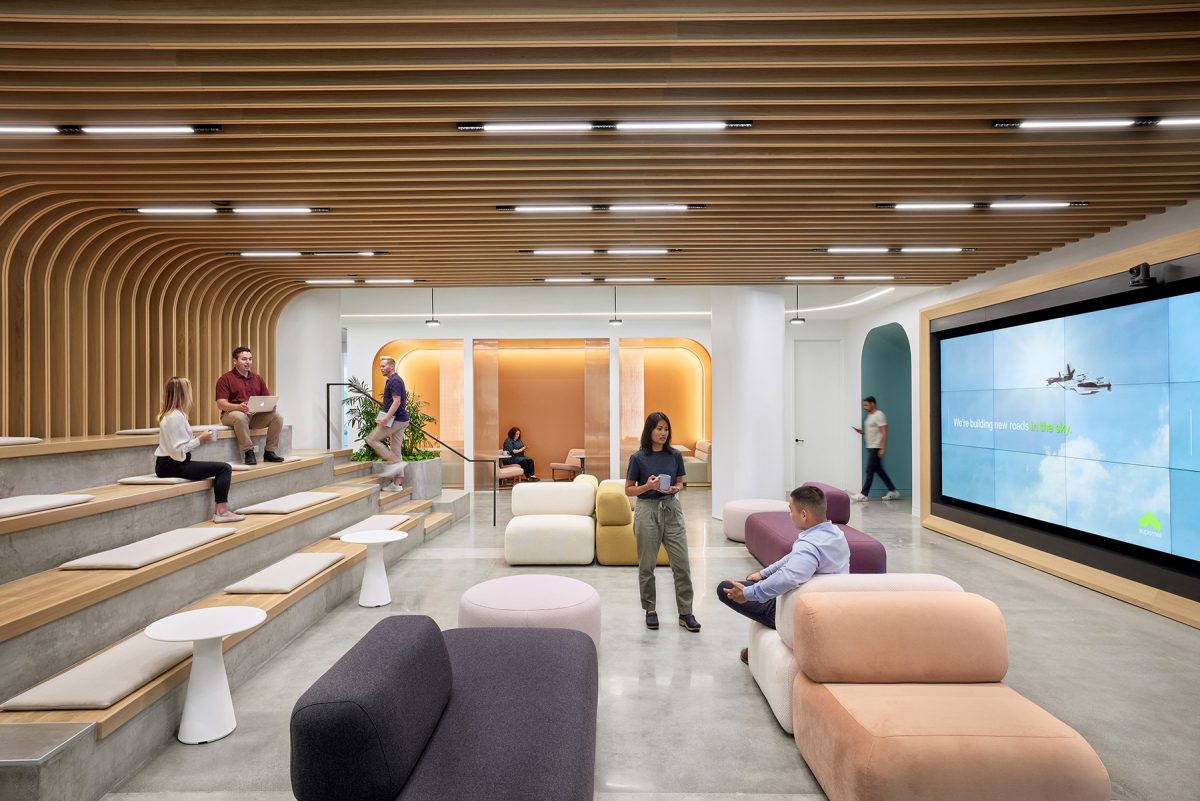
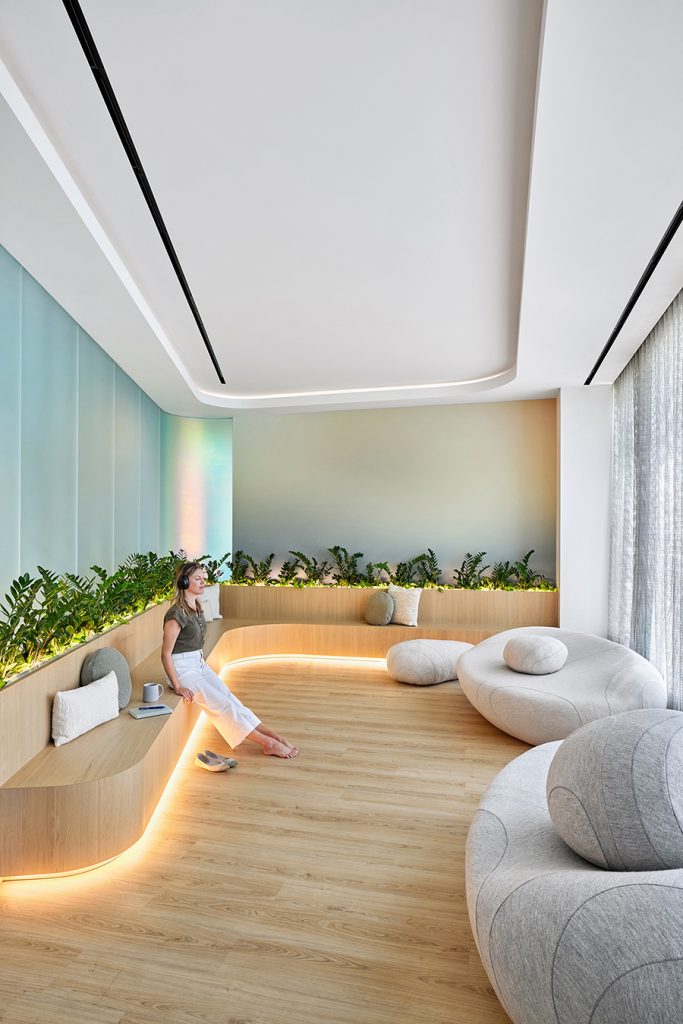
At Supernal Laguna Canyon in Irvine, the goal was simple: design a workplace that is better than home. Features include a sensory escape room, social gathering plaza with tiered seating, a kombucha bar, a fitness center and cafe. The emphasis on comfort, flexibility, and human interaction reflects a deeper understanding: collaboration thrives in environments that feel less like traditional offices and more like social ecosystems.
The need for respite spaces for employees has only grown more urgent. Digital noise hasn’t replaced earlier forms of distraction; it has intensified and multiplied.
A decade ago, smartphones and notifications were already part of daily work, but they were less pervasive, less integrated, and easier to step away from. Today, that stream follows workers seamlessly across apps, platforms, and devices, filling nearly every idle moment.
In response, offices have become more intentional about carving out silence. Phone booths, focus rooms, library-like zones, and even cultural norms around uninterrupted work are all attempts to reclaim the kind of sustained attention that constant connectivity makes increasingly difficult.
The Impact of AI
The “analog workplace” did not displace digital noise, it evolved alongside it, becoming a counterbalance rather than an alternative. The office is no longer imagined as a place free from technology, but as an environment where people can better control how they engage with it. Artificial intelligence is the latest, and perhaps most transformative, layer of this evolving workplace dynamic.
Where earlier waves of digital tools primarily facilitated communication, AI actively shapes the content, pace, and structure of work itself. From drafting documents and summarizing meetings to generating insights from complex datasets, AI systems are reducing the cognitive load of routine tasks.
This shift is already beginning to redefine how time is spent in both areas designed for work and areas intended for disconnecting. In collaborative environments, AI can function as a real-time thought partner, surfacing ideas and connections that accelerate brainstorming.
At the same time, it can compress the time required for individual work, creating new opportunities for deeper focus, or, paradoxically, increasing the pressure to remain constantly productive.
Yet AI also intensifies the very tension the “analog workplace” set out to address. As these systems become more embedded in daily workflows, the boundary between human attention and machine augmentation grows increasingly blurred. The challenge is no longer just managing notifications but navigating a continuous stream of AI-assisted output that can feel just as demanding as any inbox.
In response, the role of the physical office as a space for intentional engagement may become even more critical. Rather than competing with AI, these environments can ground it, offering moments where human judgment, creativity, and presence take precedence over automation.
Hakee’s vision wasn’t fully realized in form, but it was impressively accurate in spirit. The modern office isn’t less connected, it’s more consciously human. It recognizes that productivity depends not just on access to information, but on the quality of interaction and attention. And in an era when work can happen anywhere, the places people choose to gather are defined less by necessity and more by what they enable.
The analog office did not emerge as a rejection of the digital workplace. Instead, it settled in as its counterpart: a space designed to restore balance in a world that has only grown louder.
Contributors
Hakee Chang Elizabeth Leonhardt